Key takeaways
- Settle construction questions before the offer goes firm; after signing, the lease wording decides.
- Confirm zoning and the use clause, and get the building systems inspected, especially if the space is offered "as is".
- Toronto's Express Service targets 3 business days for eligible interior alterations up to 600 m²; other streams take 15 to 30 business days.
- Read the restoration clause before you design, because what you build may have to come out.
01 — Why it matters
Why construction belongs on your commercial lease checklist
Once the lease is signed, it controls your rights. Every construction question you leave open (who fixes the HVAC, how long you have to build, what you must remove when you leave) gets answered by the lease wording, not by what was said on the tour. A commercial lease checklist that covers construction protects your budget and your opening date.
Timing is leverage. For renewals, ENCOR Advisors, a Toronto tenant-advisory brokerage, recommends starting 18 to 24 months before expiry and warns that leverage drops significantly with less than 12 months left. The same logic applies to a new location: the time to price the build is before the offer goes firm.
Timeline phases from ENCOR Advisors' 2026 Toronto office lease renewal guide.
02 — Zoning
1. Confirm the use is allowed, on paper
Your intended use has to be permitted by the zoning by-law and by the lease's use clause. Landlords usually prefer a narrow, specific permitted use; tenants want it broad enough to let the business evolve. In a shopping centre, neighbouring tenants' exclusives can limit you further. Anton Katz, a Toronto lawyer, gives the example of a bakery three doors down limiting what you can sell.
The City of Toronto offers several zoning reviews. A Zoning Applicable Law Certificate is a preliminary review of your plans and is needed for a complete building permit application. A Zoning Use Review checks only the use, without plans. Eating or drinking establishments and some other licensed businesses need a zoning review for business licence, which costs $248.67 per application as of January 1, 2026.
03 — Condition
2. Inspect the space like you already own the problems
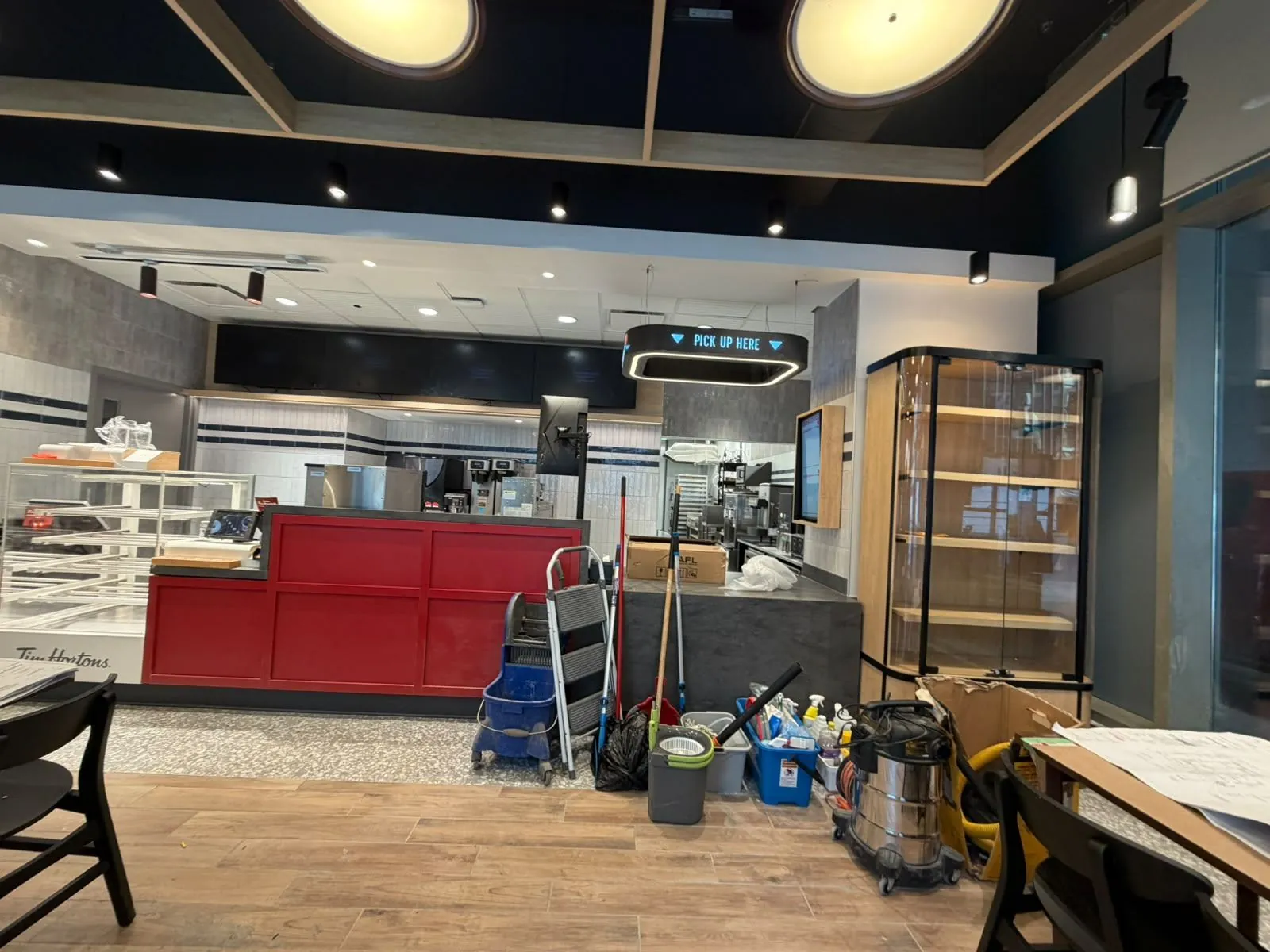
Inspect the building systems (HVAC, plumbing, roof, elevators) and note existing damage or code violations before you sign. If the unit is offered "as is," whatever you find becomes your cost. A contractor's walk-through is a practical way to do this. Bring these questions:
- How old is the HVAC unit serving the space, and who replaces it at end of life?
- What size is the electrical panel, and is there spare capacity for your equipment?
- Where are the plumbing stacks, and will new washrooms or sinks require cutting the slab?
- Are the washrooms and entrance barrier-free, or will your permit trigger upgrades?
- Do the demising walls and ceilings meet the fire separations your use requires?
- What did the previous tenant leave behind, and who removes it?
Then document it. McMillan LLP's 2026 article on restoration notes that without a documented baseline condition at commencement, end-of-term disputes are hard to resolve, and suggests a joint inspection clause.
04 — Permits
3. Build permit time into the fixturing period
Most interior alterations to a commercial unit in Toronto need a building permit. The City's review time depends on the stream, and the clock only starts on a complete application, which includes the Zoning Applicable Law Certificate.
| Item | Applies to | Target or fee |
|---|---|---|
| Express Service | Office, retail and restaurants under 30 seats (Groups D and E), interior alterations up to 600 m², no change of use or patron area | 3 business days |
| Small Building stream | Buildings within Part 9 of the Building Code, excluding houses | 15 business days |
| Large / Complex stream | Buildings within Part 3 of the Building Code | 20 / 30 business days |
| Permit fee, Groups A, B, D | Interior alterations, per m² of space receiving work | $12.45 / m² |
| Permit fee, Groups C, E, F | Interior alterations, per m² of space receiving work | $11.53 / m² |
Review targets apply to complete applications only. Fees effective January 1, 2026. Source: City of Toronto. Requirements change, so confirm with Toronto Building before you apply.
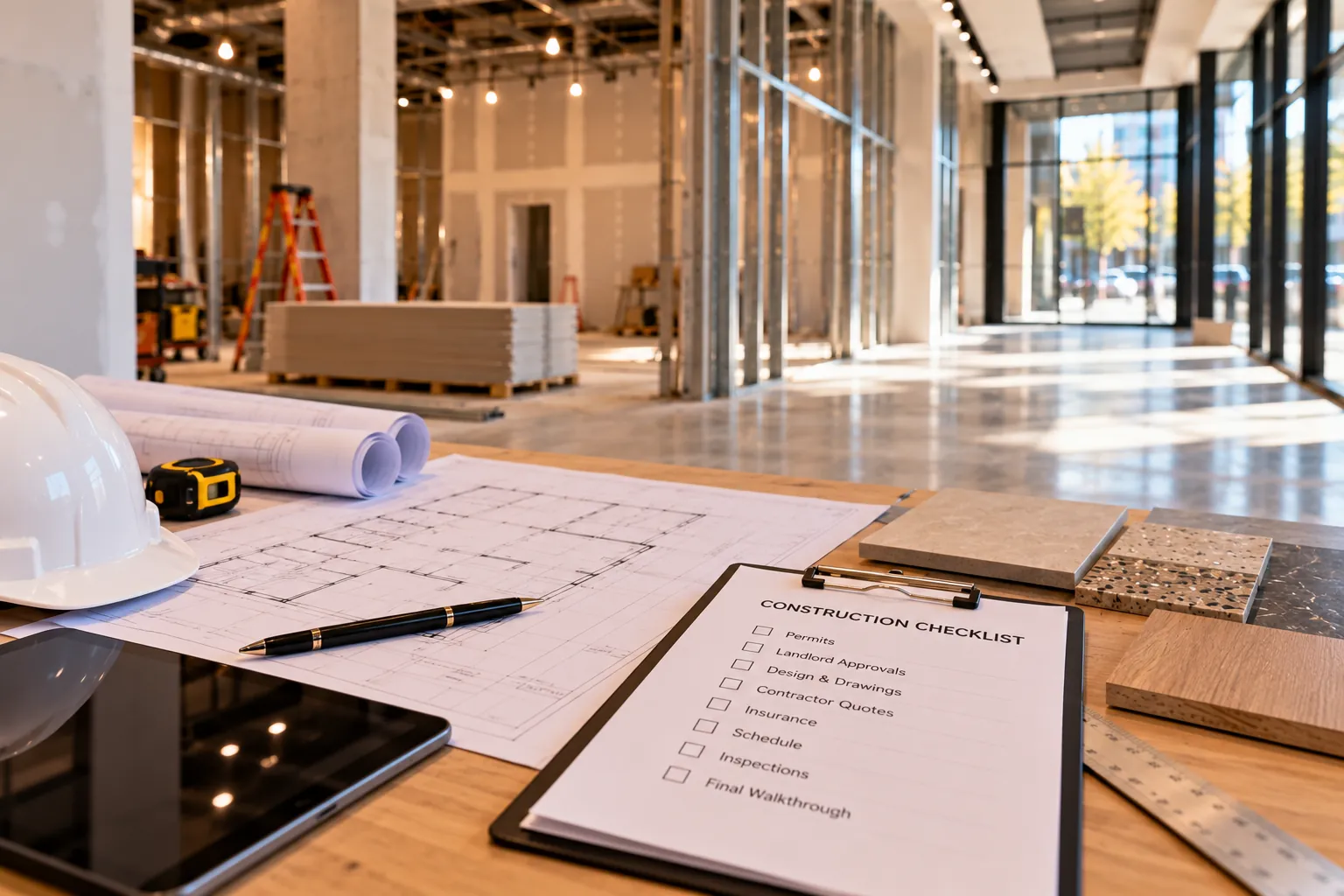
Add design time before the application and construction time after it, and you have the minimum fixturing period you need. Katz gives the example of a restaurant needing about three months to renovate. Ask for the fixturing period to start when the space is actually delivered, not on a fixed date.
05 — Money
4. Pin down who pays for what
Read the landlord's work and tenant's work schedules line by line. Anything not listed as landlord's work is, in practice, yours. Our guide to landlord's work vs. tenant's work walks through a typical split.
If there is a tenant allowance, find out what it covers, when it is paid and what paperwork triggers payment. Under Ontario's Construction Act, landlords that fund tenant improvements are exposed to liens up to 10% of that funding, so expect them to hold some of it back until the lien period passes. See tenant improvement allowances in Ontario for the details.
06 — The exit
5. Read the restoration clause before you design
Restoration obligations can require you to return the premises to base-building condition at the end of the term, which Minden Gross describes as potentially onerous and costly. Leasehold improvements generally become the landlord's property, while trade fixtures stay yours. Design choices like slab trenching, heavy millwork or a second washroom are cheap to approve now and expensive to undo later.
07 — Summary
The checklist at a glance
| Check | Ask | Who helps |
|---|---|---|
| Zoning and use | Is the use permitted, and is the use clause broad enough? | Lawyer, City zoning review |
| Building condition | What is the state of HVAC, electrical, plumbing and roof? | Contractor, inspector |
| Landlord's work | Exactly what will be delivered, and by when? | Lawyer, contractor |
| Budget | What will my tenant's work cost, and how much does the allowance cover? | Contractor |
| Schedule | Does the fixturing period cover design, permit and construction? | Contractor, designer |
| Restoration | What must be removed at the end of the term? | Lawyer |
XBuilt prices tenant improvements and restaurant fit-outs from a site visit, so you can negotiate with real numbers. Request a quote while the offer is still conditional.
This article is general information, not legal advice. Have a lawyer review your offer to lease and your lease before you sign.
FAQ
Commercial lease checklist FAQ
What should I check before signing a commercial lease?
On the construction side, confirm the use is permitted by zoning and the lease, inspect the building systems, read the landlord's work and tenant's work schedules, price your build-out, make sure the fixturing period covers permits and construction, and understand the restoration clause. Have a lawyer review the offer to lease and the lease before you sign.
How long does a building permit take for a commercial renovation in Toronto?
It depends on the review stream. Interior alterations to offices, retail and small restaurants up to 600 square metres with no change of use may qualify for Express Service, which targets 3 business days. Other complete applications are reviewed within 15 business days for small buildings and 20 or 30 business days for large or complex buildings.
What is a fixturing period?
A fixturing period is time in the premises before rent starts, so the tenant can build out the space. It should be long enough to cover design, permits and construction, and ideally start only when the landlord delivers the space.
Sources
- ENCOR Advisors — Office lease renewal in Toronto (April 2026)
- Pacific Legal PC (via Mondaq) — Renting a commercial property in Ontario (2025)
- Soloway Wright (via Mondaq) — Key provisions to consider when negotiating a commercial lease (2025)
- Anton M. Katz, Barrister and Solicitor — Conduct due diligence, negotiate before signing a commercial lease
- McMillan LLP (via Mondaq) — The cost of leaving: restoring premises at the end of a commercial lease (2026)
- Minden Gross LLP — Tenant negotiating 101: a simple guide to the commercial lease
- Bennett Jones — Ontario landlords may now have lien claim exposure from tenant's work
- City of Toronto — Apply for a zoning review
- City of Toronto — Zoning review for business licence
- City of Toronto — Building permit review streams
- City of Toronto — Interior alterations (non-residential) permit guide