Key takeaways
- Market data puts the savings of a second-generation restaurant space at about $50,000 to $150,000 compared with a raw or non-restaurant unit (Kim Ecopak, 2025).
- The kitchen exhaust, fire suppression and grease interceptor are the three systems most likely to make or break the deal. Ask for their service records.
- In Toronto, the City can require a new grease interceptor when a new business moves in, so a working trap is not automatically a reusable one.
- If you keep the same use and patron area, a small restaurant alteration may qualify for Toronto Building's Express Service.
01 — The opportunity
Why a second generation restaurant space can save money and time
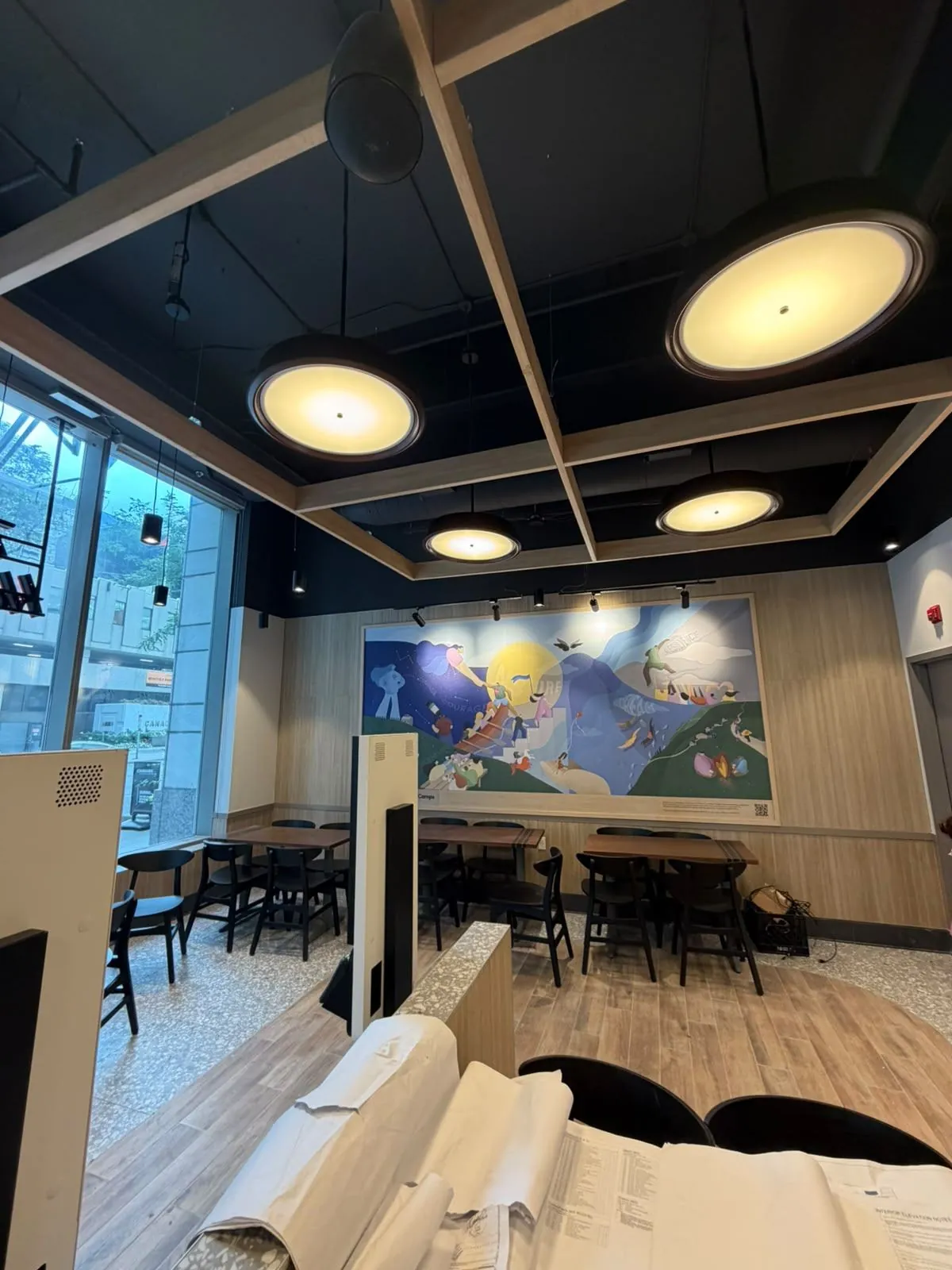
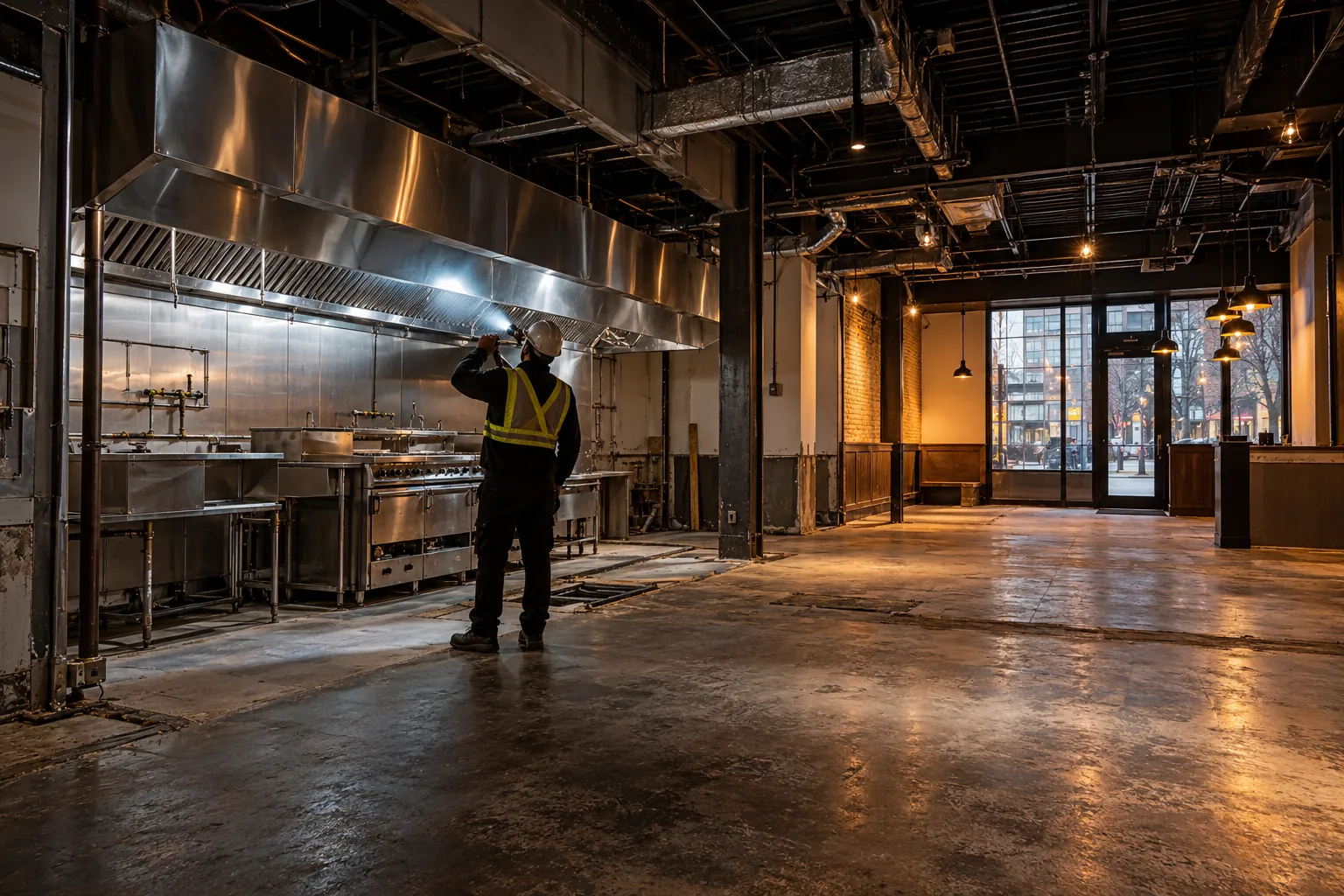
A second generation restaurant space is a unit where a restaurant has already operated. The previous tenant paid for the expensive infrastructure: kitchen exhaust, fire suppression, a grease interceptor, extra plumbing and a larger electrical service. If those systems are in good condition and fit your menu, you inherit them instead of building them.
The numbers in public market data are significant. A 2025 Canadian restaurant start-up guide estimates that a second-generation space costs about $50,000 to $150,000 less to build out than a raw shell or a former retail unit, because the hood, grease trap, fire suppression and plumbing may already be in place. A 2026 Toronto real estate guide estimates that turnkey or second-generation conversions open roughly 47% faster than ground-up builds.
Total time to open: conversion vs. ground-up
Estimated months from start to opening, Canadian markets. Hover a bar for details.
Second-generation restaurant space
Save $50K – $150K- Hood, suppression and grease interceptor may be reusable
- Electrical service often already sized for cooking
- Faster permits if use and patron area stay the same
- Every system still needs to be inspected
Raw shell or former retail unit
Full build-out- New exhaust, make-up air and fire suppression
- New plumbing and a grease interceptor
- Electrical and gas upgrades are common
- Full freedom on the kitchen layout
Savings range from Kim Ecopak's 2025 restaurant start-up cost guide. These are market figures from public sources, not XBuilt quotes. Every project is priced after a site visit and a review of your drawings.
The catch: the same guide that reports the speed advantage warns that a missing key system can add $15,000 to $50,000 in capital cost and 8 to 16 weeks of delay. The rest of this article is about finding those gaps before you sign, not after.
02 — Kitchen exhaust
The hood and fire protection system
The Ontario Fire Code (Article 2.6.1.12) requires a cooking operation that produces smoke or grease-laden vapours to have an exhaust system and a fire protection system, and Article 2.6.1.13 requires those systems to be maintained in accordance with NFPA 96. In practice, that means the hood you inherit has a paper trail. Ask the landlord or outgoing tenant for it.
- Cleaning records. NFPA 96 sets cleaning intervals by cooking volume, from quarterly for high-volume operations such as charbroiling or wok cooking to semi-annually for moderate volume. Missing records usually mean a full cleaning to bare metal before you open.
- Suppression service tags. Fire department guidance in Ontario calls for the suppression system to be checked and tested by a qualified company every six months. An expired tag is a cost, not a deal-breaker, but it tells you how the space was run.
- Hood length versus your cook line. A hood built for a café will not cover a fryer bank or charbroiler. If your equipment is longer, hotter or greasier than the last tenant's, budget for a new or extended hood.
- Duct route and roof fan. Building guidance based on NFPA 96 requires the discharge to sit at least 1.02 m above the roof and 3.05 m from property lines and air intakes. Check that the existing fan still meets this if neighbours have changed.
We explain the full requirements, costs and approval steps in our guide to commercial kitchen exhaust hoods in Ontario.
03 — Plumbing
The grease interceptor and sinks
Toronto's Sewers By-law requires every food service establishment to install, operate and maintain a grease interceptor. An existing interceptor is valuable, but the City states that it may require a replacement or a new unit after a significant change in operations, such as an expansion, a new business or a new building. In other words, a new tenant is exactly the moment the City may look at it.
- Ask for servicing records. Operators must keep them on site for at least seven years, so a well-run space should have them.
- Confirm the interceptor is sized for your menu, not the last tenant's. A bakery's trap may be undersized for a fryer-heavy concept.
- Check that the dish sinks, hood drains and cooking equipment drains are connected to it, and that hand sinks and washrooms are not.
- Count the hand-washing sinks. Toronto Public Health requires a separate hand-washing sink in every food preparation area, and a three-compartment sink where multi-use dishes are washed by hand.
Our article on grease interceptor requirements in Toronto covers sizing, connections and maintenance rules in detail.
04 — Building systems
Electrical, HVAC and hidden conditions
The systems behind the walls are where second-generation savings disappear. Use the table below as a walk-through checklist with your contractor and kitchen designer.
| System | What to ask for or check | Why it matters |
|---|---|---|
| Kitchen exhaust | Cleaning records, hood length, duct route, roof fan condition | Required by the Fire Code and maintained to NFPA 96 |
| Fire suppression | Last service tag, coverage of your appliances | Must be tested every six months under local fire guidance |
| Grease interceptor | Size, connections, seven years of service records | The City may require a new unit for a new business |
| Electrical service | Panel capacity versus your equipment schedule at peak load | Service upgrades add cost and lead time |
| HVAC and make-up air | Capacity for both the kitchen and the dining room | An undersized system leaves a hot kitchen and a negative-pressure dining room |
| Odour control | Residential tenants above or beside the unit | May require extra equipment to keep neighbours and landlord satisfied |
| Asbestos | Owner's asbestos report for materials you will disturb | Required under O. Reg. 278/05 before work is tendered |
| Accessibility | Entrance, path of travel and washrooms | An extensive renovation brings barrier-free requirements into play |
Asbestos and older buildings
Many restaurant units in Toronto sit in older plazas and main-street buildings. Under Ontario Regulation 278/05, before an owner requests tenders or arranges demolition, alteration or repair, the owner must have a report prepared stating whether the materials likely to be disturbed contain asbestos, and must give it to prospective constructors. Ask for that report before you budget the demolition.
Accessibility
Ontario's Building Code accessibility rules do not reach back into existing buildings unless an extensive renovation is planned. If your plans go that far, expect a barrier-free path of travel and barrier-free washrooms in public areas. That can mean rebuilding washrooms the previous tenant never touched. Our accessibility and washroom upgrades page explains what is involved.
05 — Approvals
Permits, licences and the lease
Keeping the same type of use is one of the biggest advantages of a second-generation space. Toronto Building's Express Service, which aims to review eligible applications within 3 business days, covers interior alterations to restaurants with fewer than 30 seats, up to 600 square metres, with no change in use and no change in patron area. Add seats or patron area and you move to a regular review stream.
Licensing can also be faster. Toronto normally requires an approved Zoning Review before you apply for an eating or drinking establishment licence, but not when you take over an existing business with a valid licence, or one that expired less than three years ago in the same category. Toronto Public Health also asks to be notified before you operate, and that rule applies to operators buying an existing food premises too.
Lease terms worth negotiating
- A remaining term long enough to recover your investment. One Toronto guide recommends at least three to five years remaining, with explicit renewal options.
- A written definition of "turnkey": which systems work, to what standard, and what equipment stays.
- Who pays if the City requires a new grease interceptor or the hood fails inspection.
- Caps on annual tax, maintenance and insurance increases, and a right to audit them.
06 — Next step
Walk the space with your contractor before you sign
An hour on site with a contractor who builds restaurants is cheap insurance. Bring your equipment list and menu, and walk the kitchen, the roof, the electrical room and the washrooms. You leave knowing what can stay and what needs a price.
XBuilt builds restaurant and QSR fit-outs across Toronto and the GTA, and coordinates the architects, engineers, permits and inspections behind them. If you are weighing a space now, send us the address and your opening target, and read our restaurant build-out timeline to see how the months stack up.
FAQ
Second-generation restaurant space FAQ
What is a second-generation restaurant space?
It is a commercial unit where a restaurant has already operated, so some of the kitchen infrastructure, such as the exhaust hood, fire suppression, grease interceptor, plumbing and electrical service, may already be in place.
How much can I save with a second-generation restaurant space?
Public 2025 market data estimates savings of about $50,000 to $150,000 compared with a raw shell or non-restaurant unit. The savings depend on whether the existing systems are in good condition and suit your menu.
Can I reuse the existing grease interceptor in Toronto?
Often, but not always. The City of Toronto may require a replacement or a new unit after a significant change in operations, such as a new business or an expansion, so confirm its size, connections and service records before you sign.
Sources
- Kim Ecopak — Restaurant startup costs in Canada (2025)
- CHI Real Estate — Turnkey restaurant spaces in Toronto (2025, updated 2026)
- Caselaw Ninja — Ontario Fire Code, exhaust and fire protection systems in cooking operations (Art. 2.6.1.12)
- Caselaw Ninja — Ontario Fire Code, maintenance of exhaust and fire protection systems (Art. 2.6.1.13)
- North Bay Fire and Emergency Services — Commercial cooking equipment
- City of Oshawa — Requirements for commercial cooking equipment
- City of Toronto — Grease interceptor installation
- City of Toronto — Grease interceptor maintenance
- City of Toronto — Structural requirements for food premises
- City of Toronto — Regulations and licensing requirements for food businesses
- City of Toronto — Building permit review streams
- City of Toronto — Eating or drinking establishment licence
- Ontario.ca — Guide to the asbestos regulation: examinations, records and reports (2023)
- Ontario.ca — Accessibility in Ontario's Building Code